Category Archives: Program Highlights

ANATOMY OF A PANDEMIC


MONDAY, DECEMBER 14 @ 7:00PM & 10:00PM

What is known about the current H1N1 influenza outbreak? How is the government preparing for the next big threat? Join the PBS NewsHour’s Ray Suarez for an exploration of the science and policy of this year’s swine flu pandemic, from federal vaccination headquarters to big city hospital emergency rooms.


Find out more »

The Christian Revolution

Peter and Paul and the Christian Revolution

SUNDAY, DECEMBER 13

The Rock and the River @ 7:00PM & 11:00PM

The Empire and the Kingdom @ 8:00PM & 12:00AM

Two millennia ago, in the Roman province of Judea, Jesus was crucified by imperial troops. Thousands before him had suffered the same fate. But unlike his predecessors on the cross, Jesus did not drop from history. Instead, his memory was kept alive by a small band of Jews — men and women who held fast to their conviction that Jesus was the Messiah… that Jesus had been anointed by God to announce His kingdom on earth. Against the odds, in the face of hostility, indifference, and dissent, these impoverished subjects of Rome managed to carry the news of Jesus out of Judea and around the Roman Empire. They managed to plant a movement that would one day conquer Rome itself. There were Barnabas and Priscilla; James, Stephen, Titus. And most famously of all, there were Peter and Paul. If one was “The Rock” upon which the church was founded, the other was a river, flooding its banks to reach all regions and peoples. Combining the actual words of Paul, Luke, and other ancient writers with period dramatizations and location footage from around the Mediterranean, Peter and Paul and the Christian Revolution is the story of a revolution that changed the world.
Find out more »

Andrew Jackson: Good, Evil and the Presidency

MONDAY, JUNE 14 @ 7:00PM & 10:00PM

The quintessential self-made man, Andrew Jackson, the son of poor Irish immigrants, rose from his humble background to become a national military icon and the 7th President of the United States. During his terms as president, Jackson confronted some of the defining issues facing a nascent nation still searching for its identity. By moving beyond the politics and ideologies set in place by the Founding Fathers, Andrew Jackson became one of the most striking, polarizing, and influential figures in American history.

Andrew Jackson: Good, Evil, and the Presidency tells the story of one of America’s most controversial presidents, Andrew Jackson. In this two-hour television event, beautiful re-enactments, lithographs, letters and the insights of distinguished scholars transport us into the world of America’s seventh president who, in one of the boldest political strokes in history, founded the Democratic party – and yet was viewed by his enemies as an American Napoleon. Andrew Jackson: Good, Evil, and the Presidency is narrated by Emmy Award-winning actor Martin Sheen and tells a story with startling relevance to the modern presidency by bringing to life one of the most remarkable, yet divisive presidents in our history.

The first president with a nickname, “Old Hickory” was born in a log cabin, and was an orphan by the age of 13, but rose to become a major general in the United States Army, and the seventh President of the United States. Andrew Jackson was a man who had strong opinions and equally as strong opposition during his eight years in political office. That he even made it to the White House surprised and shocked many, more polished, politicians. His campaign style and tenure as president were turning points in American politics. He was the first president to open the doors of the White House to blue collar Americans and he shook up the glossy world of Washington, D.C., with his common man methods and ideals. But he also oversaw one of the most controversial events in American history: the forced removal of Indian tribes, including the Cherokees, from their homes.

“Is he a president we should celebrate or a president we should apologize for? It’s a question that could certainly spark a fierce debate about our current chief executive,” notes Carl Byker, executive producer and writer of this monumental project. “But of all the presidents who Americans have had conflicting feelings about, the one who’s been simultaneously adored and reviled with the most intensity is Andrew Jackson.”

This documentary reveals that Jackson fought in the Revolutionary War when he was just 13 years old – then used what he learned to kill a man over a gambling debt; that Jackson led the American army to the most surprising victory in its history in the Battle of New Orleans – but also launched an unauthorized invasion of Florida; that Jackson was the first great champion of the common white man – but “owned” over a hundred black Americans; and that Jackson dramatically expanded the United States – but did it by brutally wrestling vast regions of the south from Native Americans.
Find out more»

NOW on PBS

The Marines Are Landing
FRIDAY, DECEMBER 11 @ 6:30PM

Over the next five years, as many as 30,000 servicemembers and their families will descend on the small island of Guam, nearly tripling its presence there.

It’s part of a larger agreement that the U.S. signed with Japan to realign American forces in the Pacific, but how will this multi-billion dollar move impact the lives and lifestyle of Guam’s nearly 180,000 residents?

This week, NOW on PBS travels to the U.S. territory of Guam to find out whether their environment and infrastructure can support such a large and quick infusion of people, and why the buildup is vital to our national security.
Find out more »

THE STORY OF INDIA

Episode 5: The Meeting of Two Oceans

THURSDAY, DECEMBER 10 @ 8:00PM & 11:00PM

The fifth episode of the story of India takes us to the time of the Renaissance in Europe, when India was the richest, most populous civilization in the world.

We visit the desert cities of Rajasthan and travel among the fabulous Mughal cities of Delhi, Agra and Fatepur Sikri. At the —just voted one of the new Seven Wonders of the World by 100 million voters worldwide—Wood demolishes an old myth about the Taj and offers a startling new theory about its construction.

Humayun's Tomb

Humayun’s Tomb, Dehli

Exploring the legacy of the Mughal empire that stretched across today’s political borders Michael Wood tells the tale of the early Mughals, starting with the redoubtable Babur, founder of the dynasty, and his grandson Akbar the Great, “one of the very greatest figures in history”, a Muslim king who tried to make India a multi racial and multi-religious state.

His aim was to achieve a Hindu-Muslim equilibrium based on the brotherhood of mankind with no one religion holding the ultimate truth – a message for our own time if ever there was one.

The story of the Mughals has some of the most fascinating characters in all of history but ends in tragedy as two brothers fought over Akbar’s legacy, in a battle that in the end broke Akbar’s dream. While waiting in the wings to pick over the spoils were…the British.
Find out more »

JERUSALEM

jerusalem

CENTER OF THE WORLD

TUESDAY, DECEMBER 1 @ 7:00PM & 12:00AM

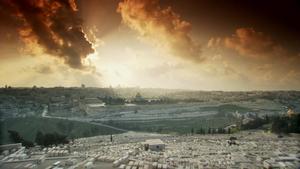
For over 40 centuries, untold numbers of Jews, Christians and Muslims have come to Jerusalem to look for God, while billions more have worshiped from afar. Jerusalem: Center of the World, a two-hour epic event in Hi-Definition by Emmy Award-winning producer/director Andrew Goldberg and Oregon Public Television, is the first documentary of this scope to delve into the historical facts and religious beliefs that have led so many thousands to live and die for this city.


FIND OUT MORE »

PBS Newshour

Launching the PBS NewsHour

The PBS NewsHour will premiere on-air on Dec. 7. at 5:00pm

BY LINDA WINSLOW AND SIMON MARKS

We’re in the midst of some big changes at the NewsHour and we wanted to take a moment to offer insight into the shifts.

The new PBS NewsHour is the latest evolution of “MacNeil-Lehrer” journalism. The new program and Web site represent a logical transformation of our news organization to engage, inform and enlighten Americans about the issues and events that directly affect their everyday lives.

This re-launch has been guided by audience and station research and is an effort to provide our broadcast and digital audiences with NewsHour content wherever, whenever and however they want to access it.

To this end, we’ve merged our broadcast and digital staffs and expanded our newsroom. Our senior correspondents will have a larger presence online. All of this is aimed at bringing you the same high-quality “MacNeil-Lehrer” journalism online that is our hallmark on-air.

On the broadcast, Jim Lehrer remains the lead anchor and executive editor. The NewsHour team of Senior Correspondents — Gwen Ifill, Judy Woodruff, Ray Suarez, Margaret Warner, Jeffrey Brown — are still in place, with plans to better showcase their talents and shape a deeper daily dive into the “why” of a story, not just the “what happened.”

And we’re introducing a new member to the correspondent team: Hari Sreenivasan. Hari will play a key role in bridging our broadcast and digital platforms. He will report and anchor video news updates on the redesigned PBS NewsHour Web site and help shape our newly-launched news blog, the Rundown.

Hari will also appear nightly on the PBS NewsHour broadcast, anchoring a summary of the day’s headlines from the broadcast’s newsroom.

Finally, we’re continuing to strengthen our collaboration with local public television stations and other public media. We want to be a vibrant hub of public media news reporting that is cross-generational, diverse and dynamic.
Find out more »

NATURE

The Dragon Chronicles

SUNDAY, DECEMBER 6 @ 6:00pm & 10:00pm

As a young boy, renowned reptile expert and conservationist Romulus (”Rom”) Whitaker dreamed of finding dragons. Years later, the successful herpetologist decided to set out to discover the real-life origins of these mythical monsters.

Rom’s snake park and crocodile bank in India, where he works to conserve and breed reptiles in the wild, were the first of their kind when he created them. Now he travels the world in search of modern day dragons. In the caves of Slovenia, he encounters the peculiar creature known as the olm, a cave-dwelling blind salamander once believed to be a baby dragon.  In the rainforests of India’s Western Ghats, Whitaker handles flying lizards, belonging to the species called Draco. When threatened or courting, the males extend the bright yellow flaps on their necks. Whitaker captures one and gently stretches out its amazing wings. Finally, Rom’s quest leads him to Indonesia’s Komodo Island, where he sees a wild Komodo dragon for the first time.
Find out more »

NOVA

Saved by the Sun

Saturday, Sunday December 5 @ 6;00pm and 11:00pm

As the Earth heats up at a dangerous rate and fossil fuels become scarcer, ordinary citizens and businesses are bypassing the federal government to lead the way in exploring a clean, renewable source of power: the sun. In this report, NOVA shines a light on how and why people across America and the world are “going solar,” using radiant energy of the sun to power homes, businesses, and even entire communities. But can everyday people really make a difference by using solar power? And can solar technologies, with their high cost and logistical challenges, truly play a bigger role in powering the future of humanity? The grand hopes, latest innovations, roiling controversies, and practical realities of solar power all come to the fore in this program.

In the 1970s, at the height of an earlier energy crisis, solar power looked like the trend of the future—President Jimmy Carter even installed solar panels on the White House. But in the ensuing decades, as the price of gas and oil dropped, solar power lost favor and failed to make a significant contribution to the nation’s power grid. Now, with rising energy needs and wars in the Middle East pushing energy prices higher, the world has been forced to take another look. Could it be time to take solar energy seriously again?

“Saved By the Sun” probes how innovative technologies, new business models, increasing financial incentives, and a growing grassroots commitment to solving the climate crisis are driving a renaissance in solar energy around the world. Across the U.S., solar panels are capping more and more roofs. In Germany, a “great wall” of solar panels lines the autobahn, feeding the Munich power grid. At Cal Tech, nanotechnology is spurring new solar inventions. Worldwide, solar energy is expected to be a $50 billion industry within a decade.

The timing of this solar boom is vital. The aging U.S. power grid is vulnerable to summertime blackouts, and fossil fuel sources are contributing to the looming threat of severe climate change. But is the groundswell of hope surrounding solar power warranted? This program presents several perspectives, ranging from a middle-class family that found peace of mind and cost savings by installing solar panels; to a leading energy correspondent who questions the economic sustainability of solar energy; and finally to entrepreneurs who believe the sun is our last, best hope for powering the future.

The story begins at the National Renewable Energy Lab in Colorado, where solar pioneer Larry “Kaz” Kazmerski explains how silicon solar cells work. Such solar cells convert photons from the sun into a current of flowing electrons (see Inside a Solar Cell). Kazmerski also reveals the cells’ biggest downfall: the sun’s up-and-down nature, which prevents solar cells from working when the sun doesn’t shine.

Then the film takes a tour of two solar-powered American houses: a modest family home near Boston and a “show home” in Maine that is so efficient, its owners pay nothing for electricity. The program reveals that, though still expensive for many, solar panels are now cheaper than ever. Some states offer cash rebates, and most now have “net metering,” which allows solar users to sell their extra energy back to the grid for credit on their bill. (See This Solar House for one family’s inspiring example.)

While a greater number of solar-powered houses can help reduce carbon-dioxide emissions in a modest way, some believe a bigger investment in a national solar infrastructure is needed. NOVA takes audiences on a rare journey inside the world’s largest solar thermal plant: Kramer Junction in the Mojave Desert, which powers some 150,000 Los Angeles-area homes. Kramer generates electricity via vast rows of parabolic-shaped mirrors, which in turn heat vats of water to the boiling point, so the resulting steam can drive huge turbines (see New Ways to Catch Rays). Though effective, there is a reason no other plants like Kramer exist: huge amounts of valuable land are needed. But this too may be changing, at least in the Southwest, where NOVA takes a peek at a solar plant that will soon help fuel the power-hungry city of Las Vegas.

Other countries are pursuing solar power with far more gusto than the U.S. NOVA travels to Germany, which despite not being known for sunny weather, has become a solar mecca. By offering cash incentives, the government has encouraged many citizens, from city dwellers to a pig farmer, to put up solar panels. Astonishingly, Germany is now on track to produce 30 percent of its electricity from renewable sources by 2020. By contrast, the U.S. gets only 1 percent of its energy from solar and wind power. However, there are those, including Vijay Vaitheeswaran, energy correspondent for The Economist, who fear that Germany’s expensive program could ultimately be hard to sustain.

While some remain skeptical, others see a blazing future through new solar technologies. The program introduces several passionate pioneers, including Sarah Kurtz, one of the forgers of the “multi-junction solar cell,” which proved itself on Mars with the robotic rovers and now could portend an exciting leap in the efficiency of solar panels; Nathan Lewis at Cal Tech, who foresees nanotechnology—technology on a submicron scale—changing the solar landscape and has envisioned a “solar paint” that could one day turn the entire surface of your house into a solar cell; and one of America’s most creative thinkers on energy issues, Amory Lovins, who has a goal of getting the U.S. off fossil fuels by 2040. Is such a goal really possible? The bottom line seems to be that nobody wants to wake up 30 years from now and wish we had tried to answer that question earlier.
Find out more »

Jazz for Young People

CREDITS: Tika Laudun

Jazz for Young People: What Is New Orleans Jazz?

FRIDAY, DECEMBER 4 @ 8:00PM & 11:00PM

Famed trumpeter and Jazz at Lincoln Center Director Wynton Marsalis returns to his hometown of New Orleans for this entertaining lesson about New Orleans Jazz. Wynton and his band talk about the roots of Jazz and demonstrate the various forms of Jazz. LPB taped this special in April at the Ernest M. Morial Convention Center.